Smart Telescopes
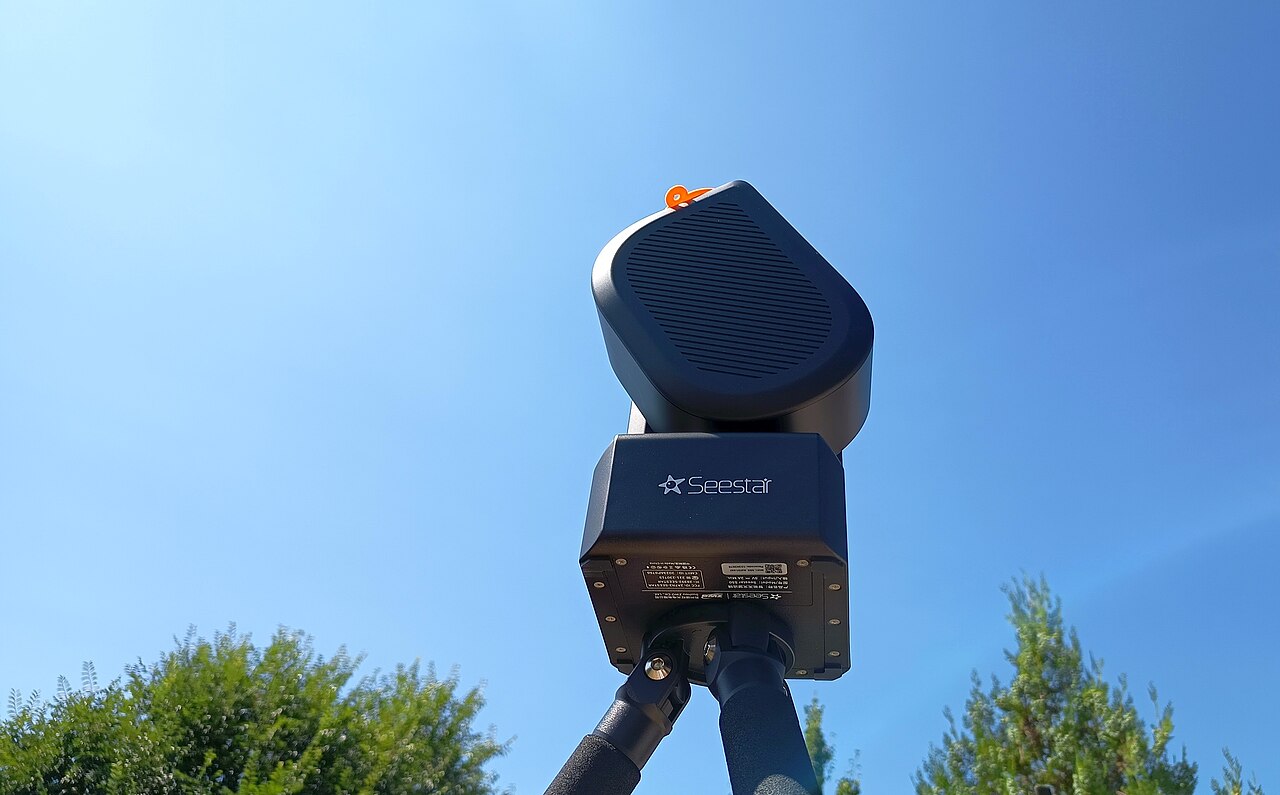

A smart telescope puts a small telescope, an astronomy camera, a motorized mount, a computer and a battery into one box, and you run it from an app on your phone or tablet. You pick a target from a list; the telescope finds it on its own, starts taking short exposures and adds each one to a running stack, so a nebula or galaxy builds up on your screen over a few minutes and keeps getting cleaner the longer you leave it.
The webcam idea, grown up
This site started with webcam astronomy: record lots of short frames instead of one long one, then let software line them up and add them. That is how video integration beats the blurring of the atmosphere on planets, and how drift integration re-aligns frames that moved between exposures. A smart telescope does the same thing for faint deep-sky objects, live and automatically: short sub-exposures, star alignment, stacking as the frames arrive. On an ordinary telescope the same method is called live stacking or EAA. Our guide to how smart telescopes work goes through each step.
Who they suit
- Beginners who want pictures on the first night. There is no polar alignment, balancing, focusing or cabling to learn; Celestron's Origin, for example, aligns itself in about a minute according to Astronomy magazine.
- People short on time or space. The whole kit sets up on a tripod in the yard. The Seestar S30 Plus weighs 1.65 kg and the DWARF mini 0.84 kg.
- Observers under city skies. The Seestar and DWARF models have a built-in dual-band filter for emission nebulae, and Vaonis sells one as an accessory.
- Outreach and citizen science. A screen is easy to share, and Unistellar owners logged more than 15,000 observations for its citizen-science program with the SETI Institute in 2025.
They suit you less if you want sharp planets (the focal lengths are short), want to look through an eyepiece (most have none), or want a system you can upgrade piece by piece. Our smart telescope vs. traditional setup comparison weighs that choice with real prices.
The makers
- ZWO Seestar. ZWO renewed its range in 2026: the 30 mm S30 Plus and S30 Pro and the 50 mm S50 Pro, each with a second wide-angle camera. The original S50 and S30 are no longer sold new.
- DwarfLab (DWARF). The pocket-size DWARF mini and the DWARF 3, plus the 90 mm Draco with a cooled sensor, on preorder in November 2026.
- Vaonis. The Vespera II, Vespera 3 and Vespera Pro 2 refractors, the Hestia that uses your phone as the camera, the modular Atlas (preorder) and the 150 mm Hyperia, an observatory-class instrument with Canon-developed optics from $99,000.
- Unistellar. The 114 mm eVscope 2 and eQuinox 2 and the 85 mm Odyssey and Odyssey Pro. The eVscope 2 and Odyssey Pro have an electronic eyepiece made with Nikon. Unistellar's own store sells every model, but large dealers show them sold out.
- Celestron Origin. A 6-inch (152 mm) f/2.2 RASA astrograph on a fork mount, the largest smart telescope on sale; the Mark II has a newer camera.
- Others. Sky-Watcher showed ORBIS prototypes with a real eyepiece in October 2026, with no price yet. Some dealers also list Spectrum Optics MirroSky SkyPilot models.
The best smart telescopes in 2026 compares all current models in one table, with prices from November 25, 2026, the discontinued models and what replaced them.
What they can and cannot do
They do well: emission nebulae, galaxies and star clusters; the Moon; the Sun, with a proper solar filter over the front (never point any telescope at the Sun without one); and, on newer models, mosaics and wide Milky Way panoramas. Most can save the raw FITS frames, so you can process them yourself later.
Their limits:
- Planets look small. Focal lengths are mostly 150 to 450 mm. ZWO itself says the S50 Pro may not show fine planetary detail such as Saturn's rings. For planets, a longer telescope with a planetary camera does far better.
- Short exposures. On an alt-az mount the field slowly rotates, so most models stack exposures of seconds, not minutes, unless they are set up in equatorial mode on a wedge.
- Small, built-in cameras. On most models you cannot swap the camera (Celestron sells a camera upgrade for the original Origin, and the Vaonis Atlas is modular), and of the models on sale or on preorder only the DWARF Draco is listed with a cooled sensor.
- No eyepiece. Most show the image only on a screen.
Smart telescopes guides
-
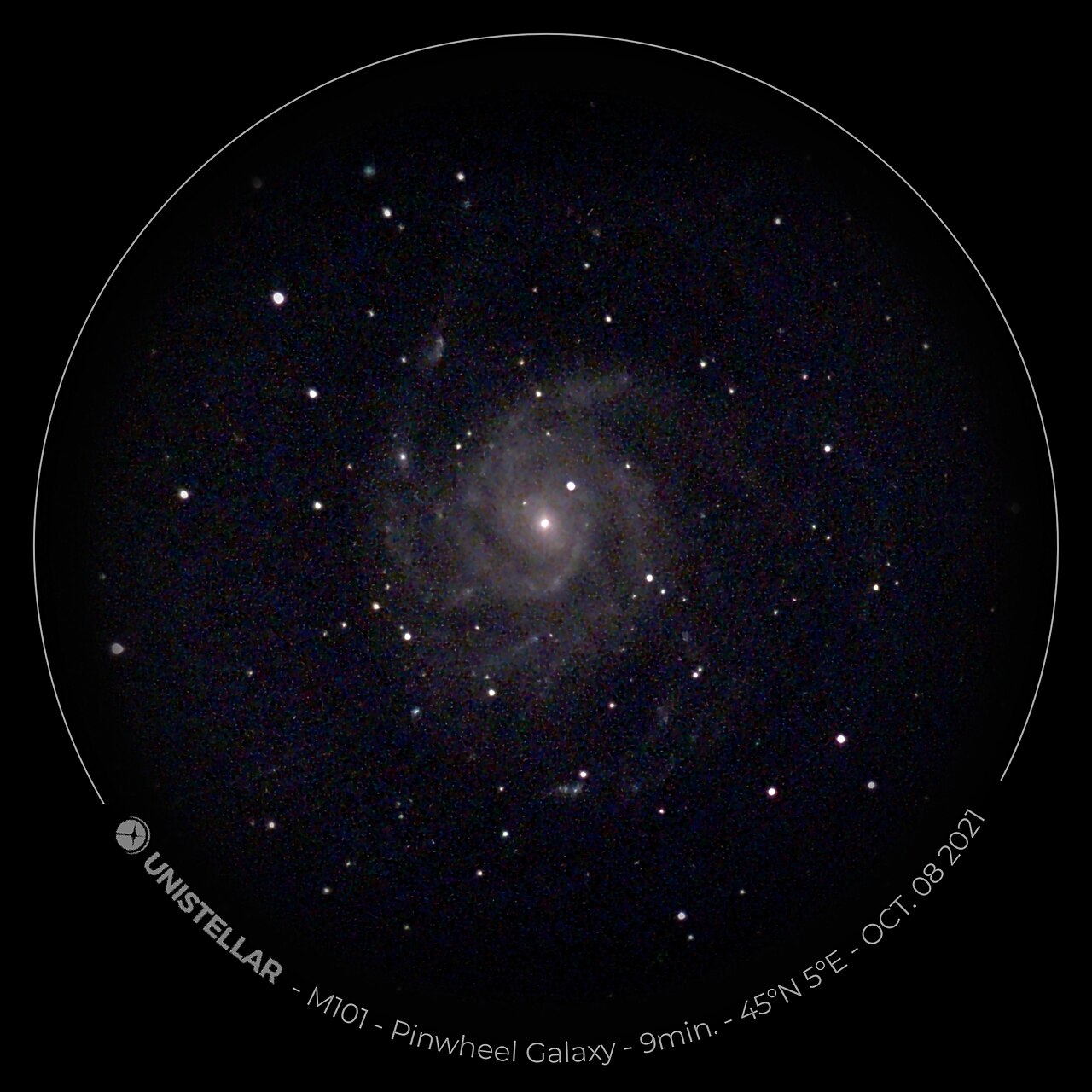 How Smart Telescopes Work
Plate solving, alt-az tracking, short exposures, live stacking, field rotation, EQ mode, mosaics and raw FITS files: what a smart telescope does.
-
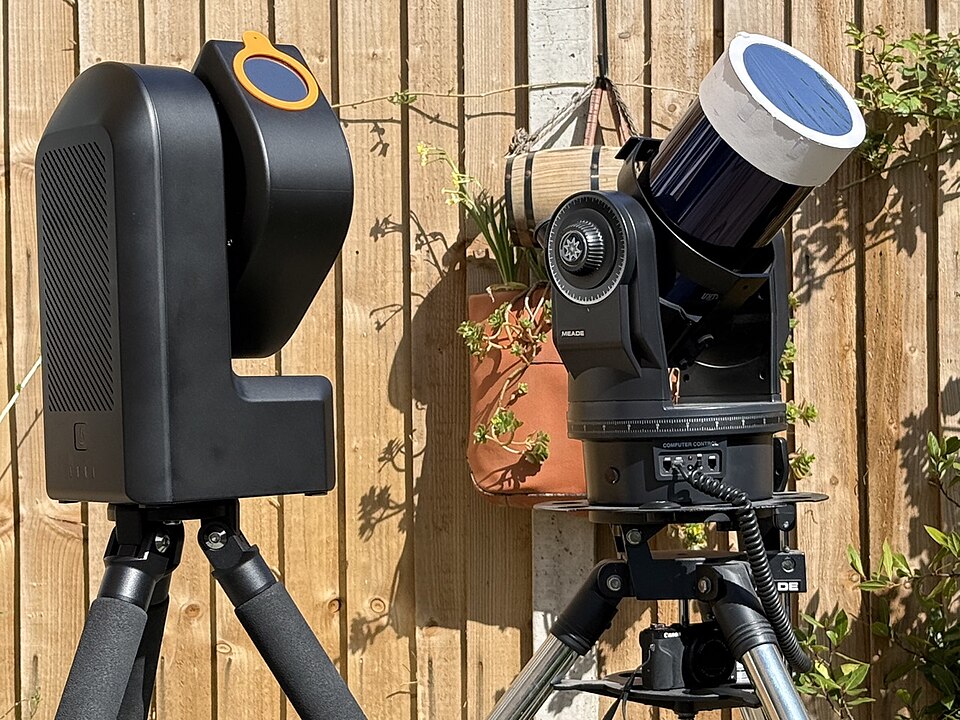 Best Smart Telescopes in 2026
Every smart telescope on sale in November 2026 compared, from a $339 pocket scope to the 6-inch Celestron Origin, plus preorders and discontinued…
-
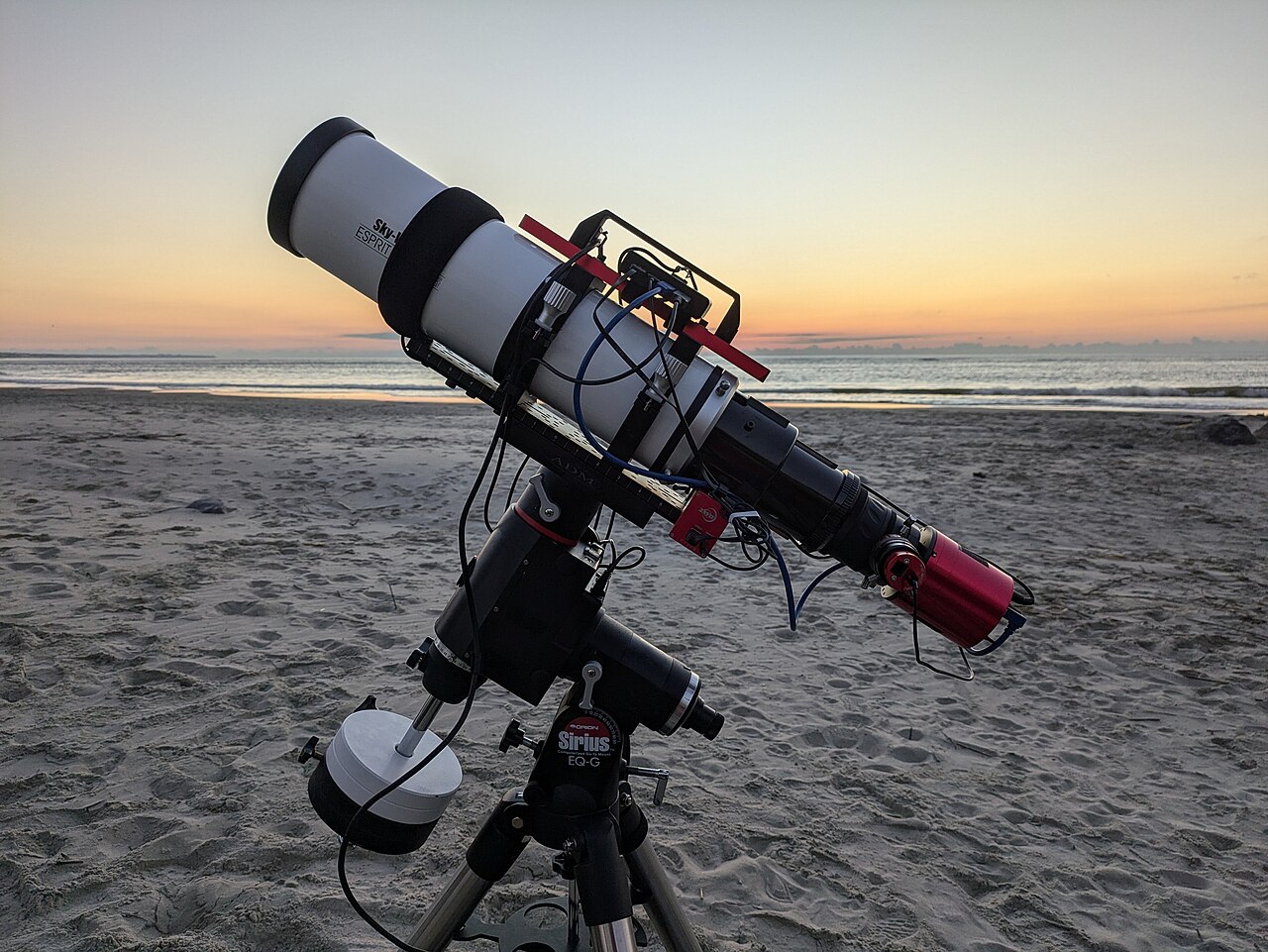 Smart Telescope vs. Traditional Astrophotography Setup
A smart telescope against a small refractor, astro camera, mount and ASIAIR, priced part by part, with what you gain and give up with each.
Sources
- skyatnightmagazine.com/astrophotography/what-are-smart-teles... (smart telescopes take many short exposures and stack them live into a running image)
- astronomy.com/observing/appraising-the-origin-home-observato... (plate-solve alignment from the main sensor, Origin aligns in about a minute, raw FITS frames)
- zwoastro.com/product/seestar-s50-pro (Seestar S50 Pro specifications, EQ mode, mosaics, JPEG and FITS output)
- seestar.com/products/seestar-s30-plus-smart-telescope (Seestar S30 Plus price and weight)
- i.zwoastro.com/wp-content/uploads/2026/08/9cdcf7965665984d64... (Seestar S50 Pro manual, short focal length may not show fine planetary detail such as Saturn's rings)
- dwarflab.com/us/collections/smart-telescope (DWARFLAB's current line-up (DWARF 3, Draco, DWARF mini))
- dwarflab.com/us/products/dwarf-mini-smart-telescope (DWARF mini price, weight and Black Friday discount)
- dwarflab.com/us/pages/draco-smart-telescope (Draco 90 mm aperture, filters, EQ mode)
- vaonis.com (Vaonis line-up (Vespera II, Vespera 3, Vespera Pro 2, Hestia, Atlas, Hyperia))
- vaonis.com/pages/product/hyperia (Hyperia 150 mm f/4, Canon-developed optics, from $99,000)
- unistellar.com/expert (eVscope 2 and eQuinox 2 specifications, Nikon electronic eyepiece on eVscope 2)
- unistellar.com/odyssey (Odyssey and Odyssey Pro specifications and eyepiece)
- science.unistellar.com/blog/2025-in-citizen-science-the-bigg... (over 15,000 citizen-science observations by Unistellar owners in 2025)
- highpointscientific.com/unistellar-odyssey-pro-fully-automat... (High Point Scientific shows Unistellar telescopes sold out and calls the Odyssey Pro discontinued)
- space.com/stargazing/skywatching-kit/celestron-origin-intell... (Celestron Origin Mark II 152 mm, weight, price, no eyepiece, planetary views underwhelming)
- celestron.com/blogs/knowledgebase/what-is-field-rotation-how... (field rotation on alt-az mounts and why it limits exposure length)
- celestron.com/products/celestron-origin-678c-camera (Origin 678C camera upgrade for the original Origin (via search extract))
- adriasky.it/en/blogs/news/sky-watcher-orbis-smart-telescope-... (Sky-Watcher ORBIS prototypes with an eyepiece and field derotator)